MemeToro has published the first contract code designed to execute launches proposed by its AI agent. The new FairLaunchEscrow is a major step because the repository previously focused on finding trends, assessing risks, and creating draft launch manifests.
It does not make the platform live today. Instead, it gives developers and crypto presale buyers code to inspect before the planned testnet phase begins.
The First Contract Turns Published Ideas Into Enforceable Rules
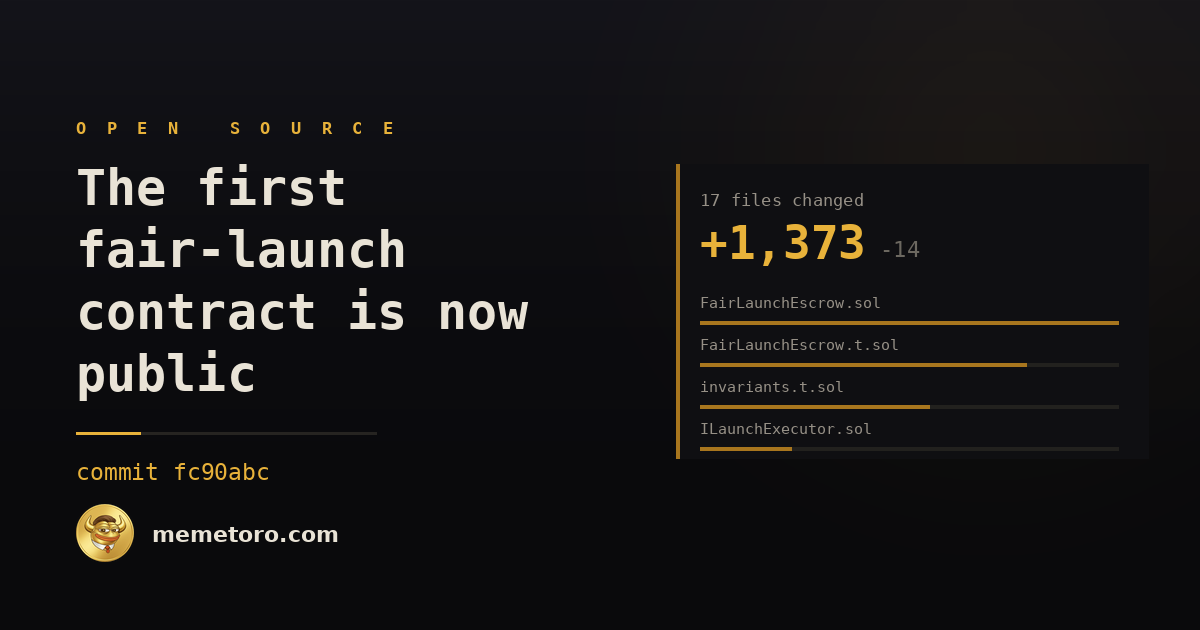
The September 7 commit is titled “First fairlaunch draft.” It changes 17 files and adds 1,373 lines, including the first working Solidity contract in MemeToro’s public repository. The code is built with Foundry, a standard toolkit used to develop and test Ethereum-compatible smart contracts.
The central file is FairLaunchEscrow.sol. It holds contributions for one launch round and applies the terms set when that round is created.
The MemeToro presale is separate from these future agent-proposed launch rounds, so readers should not confuse the new escrow with the current $MT sale contract.
The update also includes:
- ILaunchExecutor.sol defines where token creation and liquidity work will connect later.
- IERC20Minimal.sol includes the basic token functions needed to process claims.
- Mock contracts let developers test good and bad outcomes without using real assets.
- Documentation explains the architecture, decisions, limits, and contribution rules.
How the Fair-Launch Escrow Protects One Funding Round
The escrow accepts the network’s native coin during a fixed funding window. It checks the wallet cap, minimum target, maximum target, start time, and end time before recording a payment.
These settings become immutable when the contract is created, which means they cannot be edited after funding starts.
Money has only two intended exits. It can return to the same address through a refund, or the full raise can pass to the launch executor for the token and liquidity step.
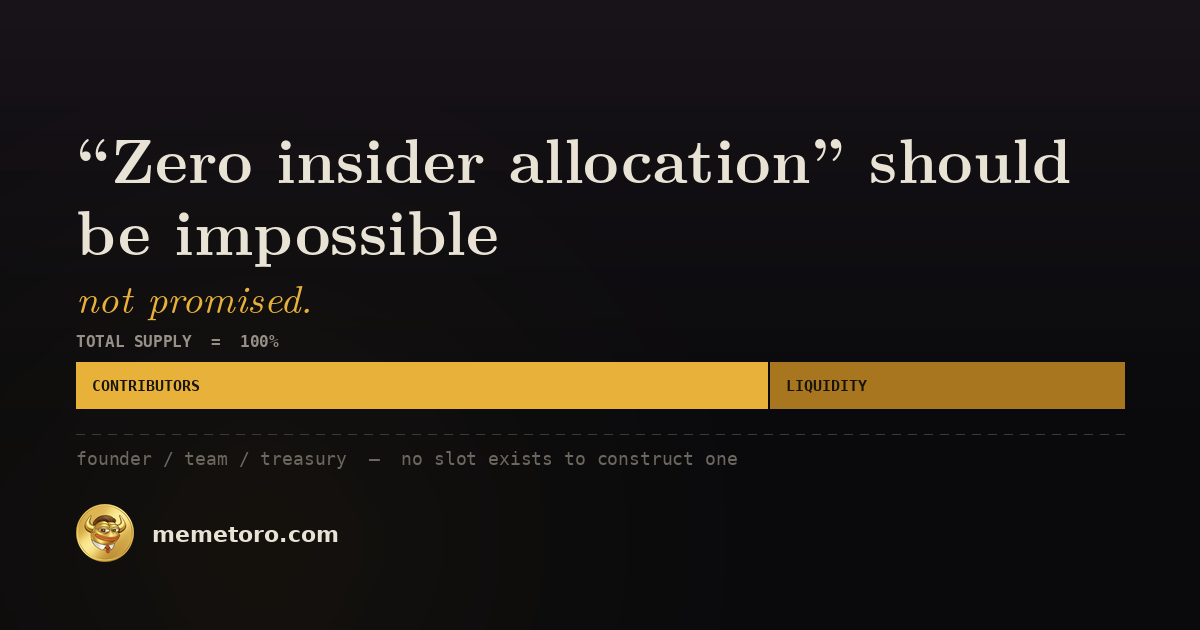
There is no payment route for a developer, deployer, owner, or treasury.
That limit matters when reviewing any crypto presale. A polished website can describe fair treatment, but the contract determines which transfers are actually possible.
The draft lets a reviewer search for privileged withdrawals instead of taking a fairness statement on trust.
The contract also stores a manifestHash, which acts like a digital fingerprint of the published launch document. Anyone should be able to compare that fingerprint with the advertised manifest.
However, the AI agent does not produce the required canonical hash yet, so this connection remains unfinished.
Tests Examine Success, Failure, and Stuck Launches
The update adds 26 unit and fuzz tests plus eight invariants. Normal tests cover funding windows, split contributions, wallet caps, hard caps, thresholds, finalization, refunds, claims, and contracts that return bad results.
Random-sequence tests then mix actions and time changes to see whether the accounting remains balanced.
These checks test several important promises:
- No wallet should contribute above its cap.
- The contract should hold exactly what it still owes.
- Claims should never exceed the contributor allocation.
- Nobody should receive a refund and tokens for the same contribution.
- Published settings should remain unchanged.
For a crypto presale, tests are evidence of engineering care, but they are not an audit. The fair-launch contract remains an unaudited first draft.
The MemeToro presale should not be presented as proof that this separate launch system is ready for production, and the public contract should not receive real money.
That makes review more useful before any public network deployment begins.
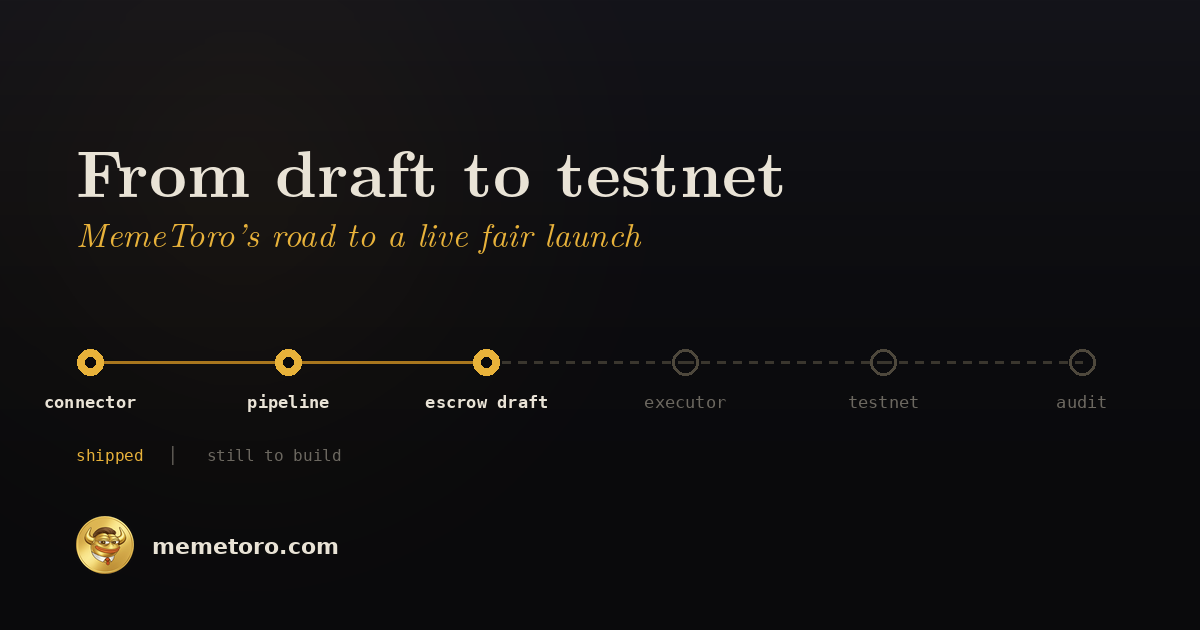
What Must Happen Before a MemeToro Launch Goes Live
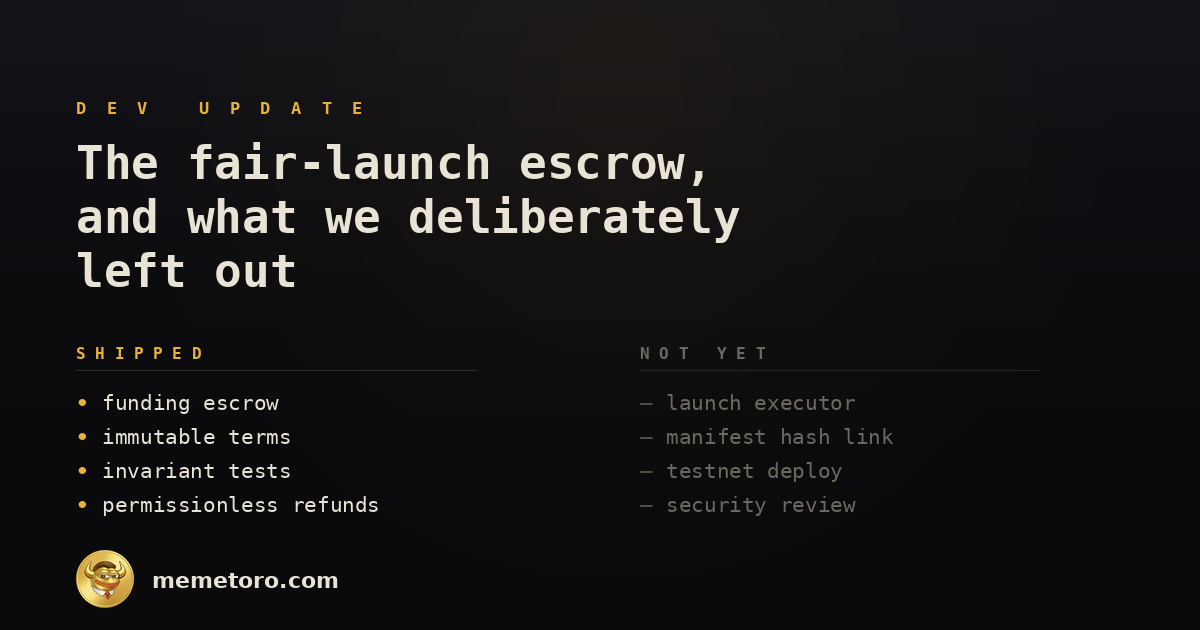
The biggest unfinished part is the real launch executor. The current interface marks the boundary where token deployment, decentralized exchange liquidity, and liquidity-provider token handling will go, but those operations are represented by test doubles today.
The contract also needs a factory and deployment scripts before rounds can be created consistently.
MemeToro must define a standard way to serialize each manifest and generate its hash. Without that bridge, the escrow can store a fingerprint, but users cannot yet reproduce it from an AI agent proposal through the finished pipeline.
This commit does not finish the fair-launch system, but it changes what outsiders can evaluate. The discussion can now move from a roadmap promise to specific Solidity code, test cases, and declared limitations.
That is useful progress for the MemeToro presale community and for anyone studying how an automated crypto presale might operate without hidden control.
FAQs
Is the MemeToro fair-launch contract live?
No. The repository clearly labels FairLaunchEscrow as an unaudited first draft that is not deployed on any network.
Testnet deployment, security review, and production preparation are still future steps. Users should not send assets to copied or unofficial contracts claiming to represent the MemeToro presale.
What role does the AI agent play?
The AI agent scans signals and develops a proposed memecoin concept with evidence, risks, and launch terms. Deterministic checks then validate the proposal.
The new escrow is meant to enforce approved funding rules, but the manifest and contract systems are not connected yet.
Does this contract control the current MemeToro presale?
No. The published draft is intended for future fair-launch rounds proposed through the MemeToro presale.
It should not be described as the contract managing the current $MT crypto presale. Buyers must verify the official MemeToro presale address and its separate audit information through approved project channels.